

Hue is famous for its Imperial City, ancient architecture, the Perfume River and its peaceful atmosphere. But there is another side of Hue that every traveler should experience: its food.
Hue cuisine is one of the most distinctive culinary traditions in Vietnam. It combines fresh ingredients, aromatic herbs, spicy seasonings and careful preparation.
Some dishes are connected to the royal history of the Nguyen Dynasty, while others come from simple local kitchens and street-food stalls.
For travelers, discovering Hue through food is a great way to experience the city beyond its famous historical attractions.
From a steaming bowl of Bún Bò Huế in the morning to delicate rice cakes, rustic clam rice and colorful sweet soups, there is something for every taste.
What Makes Hue Cuisine Special?
Hue food is known for its strong but balanced flavors, beautiful presentation and variety of small dishes.
Compared with some other Vietnamese cuisines, Hue dishes can be more spicy and aromatic. Chili, lemongrass, shrimp paste, fish sauce and fresh herbs are commonly used.
Another interesting characteristic is the size of the dishes. Many traditional Hue specialties are served in small portions, allowing travelers to order several different foods during the same meal.
This makes Hue an excellent destination for food lovers.
Instead of choosing just one dish, you can create your own food journey:
Bún Bò Huế → Bánh Bèo → Bánh Nậm → Bánh Lọc → Cơm Hến → Chè Huế
Bún Bò Huế – The Dish You Should Not Miss
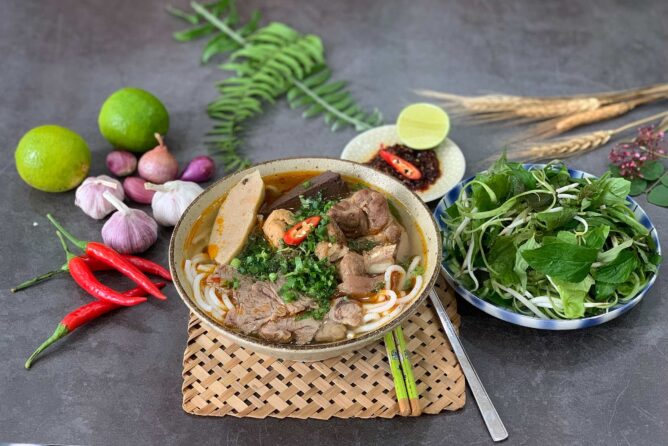
If you only have time to try one famous Hue dish, make it Bún Bò Huế.
This iconic Vietnamese noodle soup is made with thick rice noodles, beef, pork and a rich broth flavored with lemongrass and other spices.
A typical bowl may contain:
- Thick rice noodles
- Sliced beef
- Pork hock
- Vietnamese pork sausage
- Fresh herbs
- Bean sprouts
- Banana blossom
- Chili and lime
The broth is usually rich and aromatic, with a distinctive combination of lemongrass, chili and savory flavors.
For international travelers, it is worth remembering that Bún Bò Huế is not simply another version of Phở. The noodles, broth and seasonings create a completely different experience.
A bowl of Bún Bò Huế in a small local restaurant is one of the best ways to start a day in Hue.
Bánh Bèo, Bánh Nậm and Bánh Lọc – Hue’s Famous Little Cakes

Hue is especially famous for its collection of small traditional rice cakes.
Bánh Bèo
Bánh Bèo consists of small steamed rice cakes topped with dried shrimp, crispy pork and scallion oil. They are usually served with a sweet and savory fish sauce.
Bánh Nậm
Bánh Nậm is a thin steamed rice cake traditionally wrapped in banana leaves. Shrimp and pork are commonly used as the filling.
Bánh Lọc
Bánh Lọc has a translucent and slightly chewy tapioca wrapper, usually filled with shrimp and pork.
These dishes are relatively small, making them perfect for travelers who want to taste several specialties in one meal.
Cơm Hến – A Simple Dish with a Local Soul

Cơm Hến, or Hue clam rice, is one of the most traditional everyday dishes in Hue.
It combines rice with tiny freshwater mussels, herbs, peanuts, crispy toppings and local seasonings.
What makes Cơm Hến interesting is the contrast between its different textures and flavors:
soft rice + tender mussels + crunchy peanuts + crispy toppings + fresh herbs + spicy seasoning
Unlike royal cuisine, Cơm Hến is simple and rustic. It represents the everyday food culture of local people.
For travelers who want to move beyond the most famous Vietnamese dishes, Cơm Hến is an excellent choice.
Nem Lụi and Bánh Khoái – A Fun Local Food Experience
Nem Lụi is grilled pork served on skewers and usually eaten with rice paper, fresh herbs and vegetables.
Travelers can wrap the ingredients themselves before dipping them into a rich local sauce. This makes Nem Lụi not only delicious but also a fun food experience to share with friends.
Bánh Khoái is a crispy Hue-style pancake made from rice flour and usually filled with shrimp, pork and bean sprouts.
Both dishes are ideal for travelers who want something different from noodle soup.
Chè Huế – Save Room for Dessert

After trying Hue’s savory dishes, don’t forget about dessert.
Chè Huế refers to a wide variety of Vietnamese sweet soups and desserts. Depending on the type, it may contain beans, lotus seeds, corn, jelly, fruit, coconut milk or tapioca pearls.
Some popular varieties include:
- Chè đậu xanh – mung bean sweet soup
- Chè bắp – sweet corn dessert
- Chè hạt sen – lotus seed dessert
- Chè ba màu – three-color sweet dessert
For international travelers, Chè can be a fascinating introduction to Vietnamese desserts because the flavors and textures are very different from typical Western desserts.
A small bowl of Chè is also an easy and affordable way to finish a food tour around Hue.
Where Should Travelers Try Hue Food?
Dong Ba Market is one of the places where travelers can experience Hue’s everyday food culture.
However, you don’t need to limit yourself to famous tourist attractions.
Some of the best food experiences can be found in:
- Small family-run restaurants
- Local breakfast shops
- Traditional markets
- Street-food stalls
- Neighborhood restaurants
- Small restaurants specializing in one particular dish
One simple tip is to look for places where local people are eating.
A busy small restaurant filled with local customers can often provide a more authentic experience than a large restaurant designed mainly for tourists.
What Travelers Should Know Before Eating in Hue
Hue food is generally easy to enjoy, but international travelers should keep a few things in mind.
1. Hue food can be spicy
Chili is commonly used in Hue cuisine. If you prefer mild food, simply ask for less chili.
“Không cay” means “Not spicy.”
2. Try several small dishes
Don’t order only one dish. Hue’s cuisine is best experienced by trying several specialties.
3. Ask about ingredients
If you have allergies or dietary restrictions, ask what ingredients are used before ordering.
Some dishes contain shrimp, fish sauce or fermented seafood products.
4. Carry some cash
Small food stalls and traditional markets may prefer cash.
5. Take your time
Food in Hue is not simply about eating. It is part of the city’s culture.
Sit down, observe the local atmosphere and enjoy the experience.
Hue Royal Cuisine – Food with a Story
Hue’s food culture is closely connected with the city’s history as the imperial capital of Vietnam.
During the Nguyen Dynasty, food served to the royal court was prepared with particular attention to ingredients, presentation and detail.
Today, travelers can experience versions of traditional royal cuisine in selected restaurants and cultural dining experiences.
However, Hue cuisine is not only about royal food.
There are two sides to the city’s culinary identity:
Royal cuisine represents refinement and tradition.
Local food represents everyday life and the soul of Hue.
Experiencing both sides gives travelers a deeper understanding of the city.
A One-Day Food Journey Through Hue
If you only have one day in Hue, you can still experience many of the city’s signature dishes.
Breakfast: Start with Bún Bò Huế.
Late morning: Try Bánh Bèo, Bánh Nậm and Bánh Lọc.
Lunch: Enjoy Cơm Hến or another local rice dish.
Afternoon: Relax with Vietnamese coffee or tea.
Dinner: Try Nem Lụi or Bánh Khoái.
Dessert: Finish with a colorful bowl of Chè Huế.
This simple food journey allows you to discover several different flavors without spending your entire day in restaurants.
Final Thoughts – Taste Hue Beyond the Imperial City
Hue is a destination where history, culture and food are deeply connected.
The Imperial City tells the story of Vietnam’s royal past. The Perfume River gives the city its peaceful character. But the small restaurants, markets and food stalls reveal the everyday soul of Hue.
From the rich flavor of Bún Bò Huế and the delicate Bánh Bèo to rustic Cơm Hến, crispy Bánh Khoái, grilled Nem Lụi and colorful Chè Huế, every dish tells a different story.
So when you visit Hue, don’t just explore its monuments.
Sit down. Order a local dish. Try something new. And let the flavors of Hue tell you their own story.
Frequently Asked Questions About Hue Food
What food is Hue famous for?
Hue is famous for Bún Bò Huế, Cơm Hến, Bánh Bèo, Bánh Nậm, Bánh Lọc, Bánh Khoái, Nem Lụi and Chè Huế.
Is Hue food spicy?
Some Hue dishes can be quite spicy. If you prefer mild flavors, ask for less chili when ordering.
What should I eat first in Hue?
For first-time visitors, Bún Bò Huế is the best place to start. After that, try a selection of Hue’s traditional small cakes.
Where can I try authentic Hue food?
Traditional markets, small family-run restaurants and local street-food stalls are great places to experience Hue cuisine.
Is Hue food suitable for international travelers?
Yes. Most visitors can easily find dishes they enjoy. Travelers with allergies or dietary restrictions should ask about ingredients before ordering.
What makes Hue food different from other Vietnamese cuisine?
Hue cuisine is known for its strong flavors, spicy seasonings, fresh herbs, careful presentation and connection with the city’s imperial history.