

Hue is famous for its imperial heritage, historic pagodas, and distinctive culinary traditions. Among its many local specialties, Com Hen Hue stands out as a humble yet flavorful dish that reflects the everyday food culture of central Vietnam.
Made with rice, baby clams, fresh herbs, crunchy toppings, and a spicy clam broth, this local favorite offers a combination of textures and flavors in one bowl. Although its ingredients are simple, the dish has a distinctive character that makes it a memorable part of any food trip to Hue.
If you are visiting the former imperial capital, trying Com Hen is an excellent way to discover a more authentic side of Hue cuisine.
1. What Is Com Hen Hue?

Com Hen is a traditional Hue dish prepared with cooked rice and small freshwater clams, commonly known locally as hen. The ingredients are arranged in a bowl and served with fresh herbs, roasted peanuts, crispy rice crackers, and other flavorful toppings.
A small bowl of spicy clam broth usually accompanies the dish. Diners can add the broth to the rice or enjoy it separately, depending on local serving styles and personal preference.
Unlike many rice dishes that are served hot and relatively mild, Com Hen is known for its bold seasoning, contrasting textures, and distinctive combination of spicy, savory, fresh, and crunchy ingredients.
Although it is now popular with visitors, Com Hen remains closely associated with everyday life and local food traditions in Hue.
2. The Ingredients That Make Com Hen Special
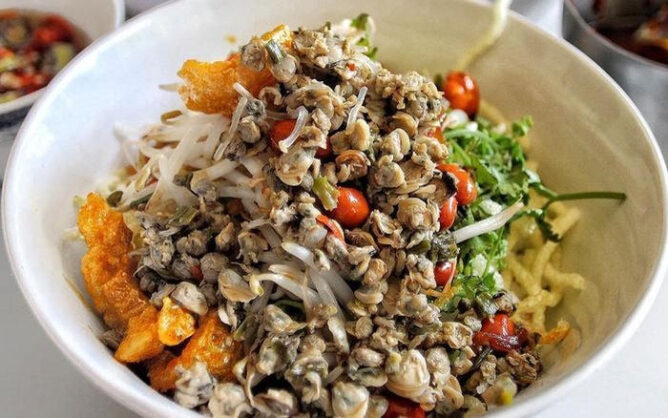
The appeal of Com Hen comes from the way its ingredients work together. Each component adds a different flavor or texture.
-
Baby clams: These provide the dish’s characteristic seafood flavor.
-
Cooked rice: Rice forms the base and absorbs the seasonings and broth.
-
Fresh herbs and vegetables: Ingredients such as herbs and thinly sliced banana blossom add freshness and crunch.
-
Roasted peanuts: These contribute a nutty aroma and a crunchy texture.
-
Crispy rice crackers: These provide additional crunch and contrast with the softer rice.
-
Chili and seasoning: Spices create the distinctive heat associated with many Hue dishes.
-
Clam broth: This adds a savory seafood flavor and can be enjoyed separately or mixed into the bowl.
Recipes vary between eateries, so the exact ingredients and presentation may differ. Nevertheless, the balance between savory clams, fresh vegetables, crunchy toppings, and spicy seasoning is central to the dish’s appeal.
3. The Story Behind Hue’s Famous Clam Rice

Com Hen is commonly associated with the riverside community of Con Hen, an area in Hue known for its connection with clam harvesting and the development of this local specialty.
Its origins are often linked to modest household cooking, where rice and locally available clams were combined with herbs and seasonings to create an economical, satisfying meal.
Over time, the dish became an important part of Hue’s culinary identity. Small eateries and family-run food stalls helped introduce it to more people, while visitors gradually discovered it as one of the city’s must-try specialties.
Today, Com Hen represents an appealing contrast within Hue cuisine. The city is famous for elaborate royal dishes, yet some of its most memorable food experiences come from simple meals rooted in everyday local life.
4. Where to Eat Com Hen in Hue

You can find Com Hen at local eateries, family-run food stalls, and restaurants specializing in traditional Hue cuisine.
For a more local experience, look for places that focus on clam-based dishes rather than restaurants offering only a broad selection of Vietnamese food. You may also see Bun Hen, a noodle-based variation that uses similar ingredients and seasonings.
The Con Hen area is particularly associated with this specialty. However, you do not necessarily need to travel there to try the dish, as it is available in other parts of the city.
When choosing where to eat, consider these tips:
-
Look for busy local eateries with freshly prepared food.
-
Ask whether the dish is served with a separate bowl of clam broth.
-
Check the spice level if you prefer milder flavors.
-
Confirm prices before ordering at unfamiliar establishments.
-
If you have a seafood allergy, avoid the dish unless the ingredients and preparation have been confirmed safe for you.
Restaurant menus, opening hours, and prices can change, so check current information before visiting a particular venue.
5. How to Eat Com Hen Like a Local

One of the most enjoyable parts of eating Com Hen is combining the different ingredients according to your taste.
First, take a little rice with the clams, herbs, and crunchy toppings. Then add chili or seasoning if you enjoy stronger flavors. You can mix in some clam broth to make the dish more savory and moist, or keep the broth separate and alternate between bites of rice and sips of soup.
There is no need to follow a strict method. Some people prefer a generous amount of chili, while others focus on the fresh herbs and natural seafood flavor.
If this is your first time trying Com Hen, start with a small amount of chili and broth. You can always add more once you discover the flavor balance you prefer.
6. Is Com Hen Spicy?
Com Hen can be spicy because chili and strong seasonings are common in Hue cuisine. However, the heat level varies depending on the restaurant and the recipe.
If you prefer mild food, ask the vendor to reduce the chili or serve it separately.
Useful Vietnamese phrases include:
-
“Ít cay thôi.” — Just a little spicy, please.
-
“Không cho ớt.” — No chili, please.
-
“Cho tôi nước dùng riêng.” — Please serve the broth separately.
-
“Món này có những nguyên liệu gì?” — What ingredients are in this dish?
These simple phrases can help you enjoy the dish more comfortably, especially if you are unfamiliar with central Vietnamese flavors.
7. Com Hen or Bun Hen: Which Should You Try?

Both Com Hen and Bun Hen feature the distinctive flavors of Hue’s clam-based cuisine. The main difference is the base ingredient.
| Feature | Com Hen | Bun Hen |
|---|---|---|
| Main base | Cooked rice | Rice noodles |
| Main ingredient | Baby clams | Baby clams |
| Typical accompaniments | Herbs, peanuts, crispy toppings, broth | Herbs, peanuts, crispy toppings, broth |
| Best for | Travelers who enjoy rice dishes | Travelers who prefer noodle dishes |
If you enjoy rice and want to try the classic clam rice specialty, choose Com Hen. On the other hand, Bun Hen is a great alternative if you prefer noodles.
If you have enough time in Hue, trying both dishes is a delicious way to explore the variety of local food.
8. Practical Tips for Travelers
To make your Com Hen experience more enjoyable, keep a few practical details in mind.
Choose a suitable time: Com Hen is commonly enjoyed as a casual local meal. Some eateries may sell out of particular dishes, so arriving during regular meal hours is sensible.
Bring cash: Smaller local food stalls may prefer cash payments.
Check the ingredients: Traditional Com Hen is a seafood dish and may include fish sauce or other seasonings. It is not suitable for vegetarians or people avoiding seafood unless a suitable alternative is prepared.
Prepare for different textures: The combination of soft rice, tender clams, fresh herbs, and crunchy toppings is part of the experience.
Keep an open mind: Some visitors may find the flavor stronger or spicier than expected. Try a few bites before deciding whether to add more seasoning.
Most importantly, enjoy the meal as part of your wider exploration of Hue’s local culture.
Frequently Asked Questions About Com Hen Hue
What is Com Hen Hue made of?
Com Hen is typically made with cooked rice, baby clams, fresh herbs, peanuts, crispy toppings, chili, and savory clam broth.
Is Com Hen a famous food in Hue?
Yes. Com Hen is one of Hue’s best-known local specialties and is closely associated with the city’s everyday food culture.
Is Com Hen suitable for vegetarians?
Traditional Com Hen contains clams and is therefore not vegetarian. Travelers following a vegetarian or vegan diet should choose a different dish or ask whether a fully plant-based alternative is available.
Is Com Hen very spicy?
It can be spicy, but the heat level varies. Ask for less chili or request the chili separately if you prefer mild food.
What is the difference between Com Hen and Bun Hen?
Com Hen uses rice as its base, while Bun Hen uses rice noodles. Both generally feature baby clams, herbs, crunchy toppings, and seasoning.
Where can travelers try authentic Com Hen in Hue?
Local eateries and food stalls specializing in traditional Hue cuisine are good places to start. The Con Hen area is particularly associated with the dish, although it is also available elsewhere in the city.
Discover Hue Through Its Local Cuisine
Com Hen Hue is a wonderful example of how simple ingredients can create a memorable culinary experience. With its savory clams, fresh herbs, crunchy toppings, and distinctive seasoning, this humble dish captures an important part of the former imperial capital’s food culture.
Whether you are a first-time visitor or a returning traveler, make time to try Com Hen alongside Hue’s other specialties. It is an easy and delicious way to connect with the city’s everyday traditions.
Planning your trip to Hue? Explore more food guides, cultural attractions, and local experiences with Hue24h.